

![How to Build a Successful Cross-Platform LiveOps Strategy [Updated for 2026]](/images/blog/how-to-build-a-successful-cross-platform-liveops-strategy-featured.webp)

With 95% of game studios now maintaining or developing live service titles, scalability and growth must be embedded from day one. Here are three tips to maximize the success of your LiveOps strategy across platforms.
Why Cross-Platform LiveOps Is Essential for Modern Games
According to Griffin Gaming Partners' 2023 Game Development Report, 95% of game studios are currently maintaining or developing a Live Service game (a title with the planned arrival of regular updates).
Releasing games complete on disc - or cartridge depending on the length of your game dev career - is becoming an increasingly rare sight. With new features and events pushed regularly to titles, games today serve as a container for future updates.
Scalability and growth should be embedded into the title from day one. Whether your game is on desktop or mobile, the game needs not only be ready for release day, but also for years to come through the arrival of updates. Here are three tips to maximize the success of your LiveOps strategy across platforms:
How Game Configs Keep Your LiveOps Organized Across Platforms
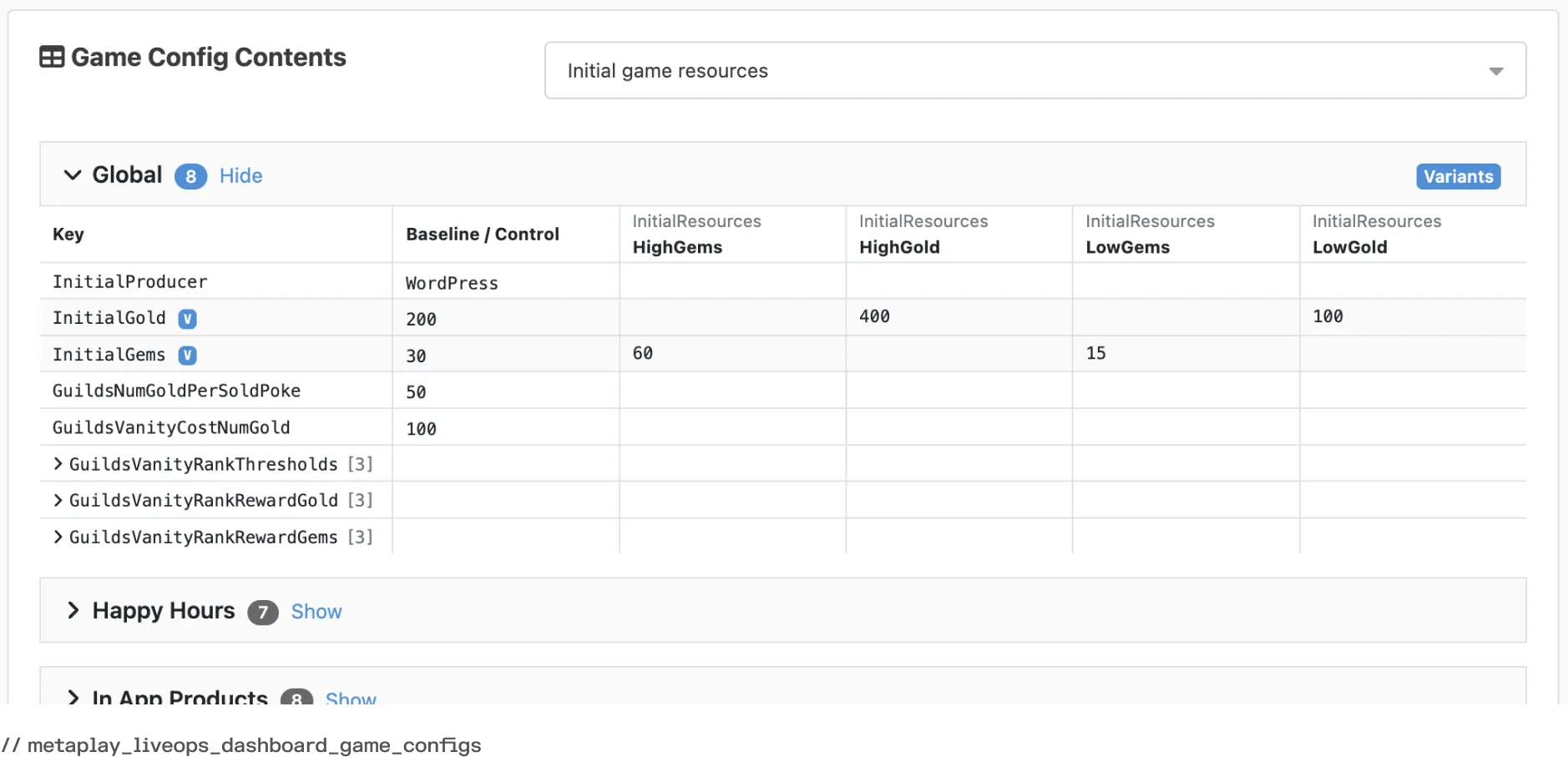
At Metaplay, we're fans of game configs. These display in-game data as spreadsheet cells rather than code. It's not just because we think seeing a game's inner workings displayed on a spreadsheet is cool (ok, maybe a little), but mainly because configs are designed to be easily updatable.
For example, setting up the health and damage of an enemy as a config means that enemies can quickly be buffed or nerfed in line with community feedback and gameplay balancing.
Configs from Metaplay are compatible with all Unity games on mobile and PC. This means over-the-air LiveOps updates can be pushed to players no matter where they play from.
Why Endgame Content Matters for Player Retention and Revenue
The post-campaign content of your game should be another key consideration of your LiveOps strategy. Some games solve this by simply not having a base campaign to finish but instead a constant arrival of new launches and seasons; take Fortnite or Squad Busters, for example.
Other live service titles such as Destiny 2 introduced a story campaign and mountains of additional content by way of raids and missions. In fact, the endgame and postgame content became such a core part of the game that the original campaign was vaulted entirely.
It's a simple formula that applies no matter the platform played on; the more involved a player is in the title, the more revenue they'll bring in. It's vital to keep these high spenders engaged with new content in order to decrease churn.
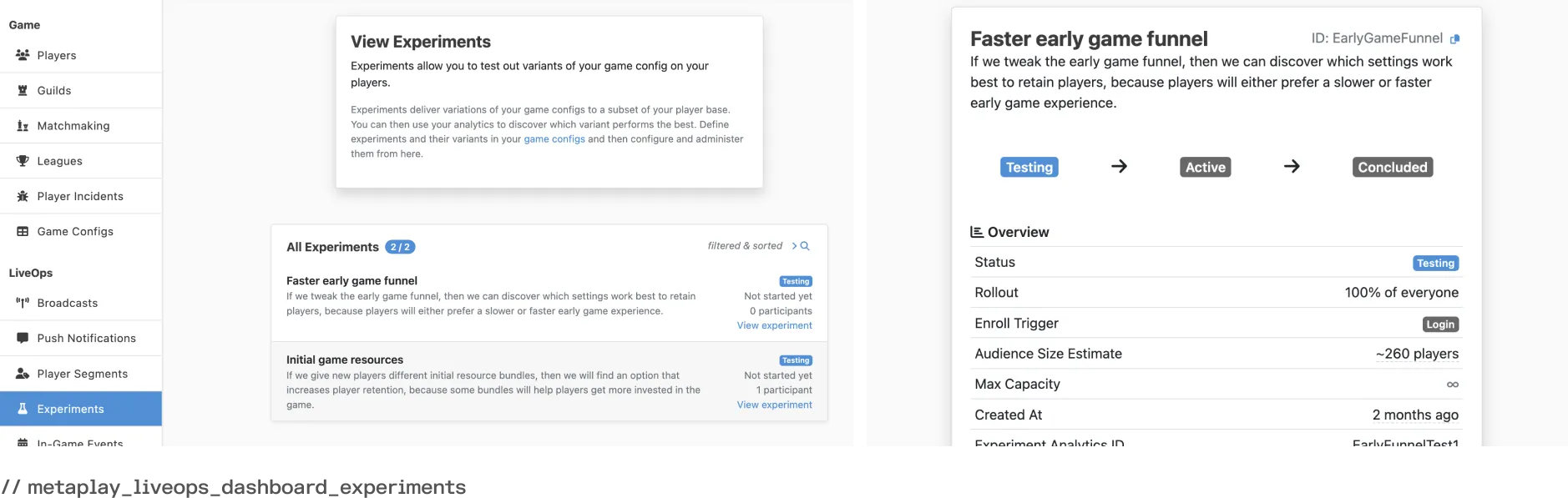
Additional content should be carefully tested to ensure your game is balanced. A/B testing new mechanics is one way of ensuring maximum game balance. At Metaplay we use Experiments as a tool to conduct controlled studies of how changes to your game configs might affect your players.
How Player Segmentation Drives Targeted LiveOps Success
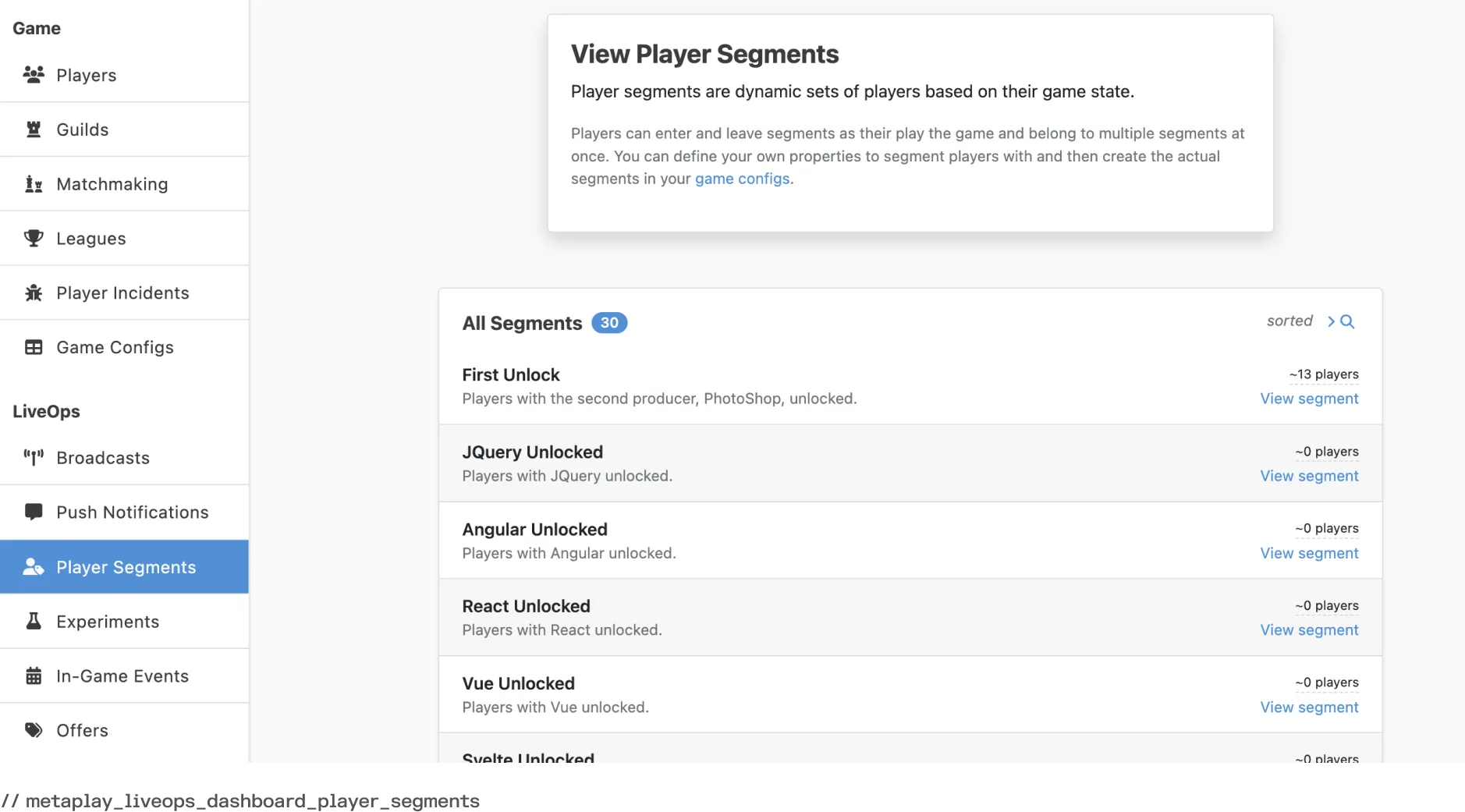
You may wish to push these changes to a particular group of players. This is made easy through segmentation, which groups players based on their characteristics and behaviors. Notifications, and even certain gameplay features and events, can be targeted to specific groups of players.
For example, players can be segmented by their spending to highlight particular deals for in-game currency. Your LiveOps strategy can therefore be tailored not only to your overall player base but also specific audiences.
This also applies to the platform a gamer is playing on; notifications and messages can be tailored based on the characteristics of the platform's players.
Key Takeaway: Build for Growth From Day One
Ultimately, the factors which make a mobile LiveOps strategy successful also apply to cross-platform. Games designed with future updates in mind, built on the tech needed to support growth, have the best chance of succeeding.
A core game built on strong foundations can be tweaked to appeal to the characteristics of audiences across platforms. Explore how Metaplay can support your LiveOps strategy by trying out the new playable version of the Metaplay LiveOps Dashboard, or download the Metaplay SDK and take our whole tech stack for a spin. You won't regret it.
FAQ
What percentage of game studios are developing live service games?
According to Griffin Gaming Partners' 2023 Game Development Report, 95% of game studios are currently maintaining or developing a Live Service game with planned regular updates. This makes a robust LiveOps strategy essential for virtually every modern game studio.
How do game configs help with cross-platform LiveOps?
Game configs display in-game data as spreadsheet cells rather than code, making them easily updatable by both technical and non-technical team members. They're compatible across platforms, allowing over-the-air LiveOps updates to be pushed to all players regardless of whether they play on mobile or PC.
Why is player segmentation important for LiveOps strategies?
Segmentation groups players based on their characteristics and behaviors, allowing you to target notifications, features, and events to specific audiences. This means you can tailor deals to high spenders, customize content by platform, and deliver personalized experiences that maximize engagement and revenue.
How does A/B testing improve LiveOps content releases?
A/B testing (called Experiments in Metaplay) lets you conduct controlled studies of how changes to your game configs affect players before rolling them out broadly. This ensures game balance is maintained when introducing new mechanics or content, reducing the risk of negative impacts on player experience.

![Live Service Games 2024 Review - Lessons From This Year's Biggest Hits [Updated for 2026]](/images/blog/live-service-gaming-2024-featured.webp)
![Automating QA: The Key to Supercharging Mobile Game LiveOps [Updated for 2026]](/images/blog/why-automating-qa-is-the-key-to-supercharging-mobile-game-liveops-featured.webp)