

While NFTs have developed a negative reputation in the mainstream, gaming tells a different story. We look at the data around NFT awareness, play-to-earn success stories, and whether the technology still has potential for game developers.
Nowadays, if you start talking about NFTs, you'll get a lot of backlash. They've developed a bit of a negative reputation. But this is largely because some NFT companies are selling NFTs without really adding any value.
From what we can see, it's a different story when it comes to gaming. Being able to earn and own cards, items or characters is much more tangible than just buying an image. And people understand the purpose.
Has the hype died, though? Have NFTs run their course? We're not so sure. It seems to us that there's still potential. Here's what we found.
Awareness of NFTs Is Growing
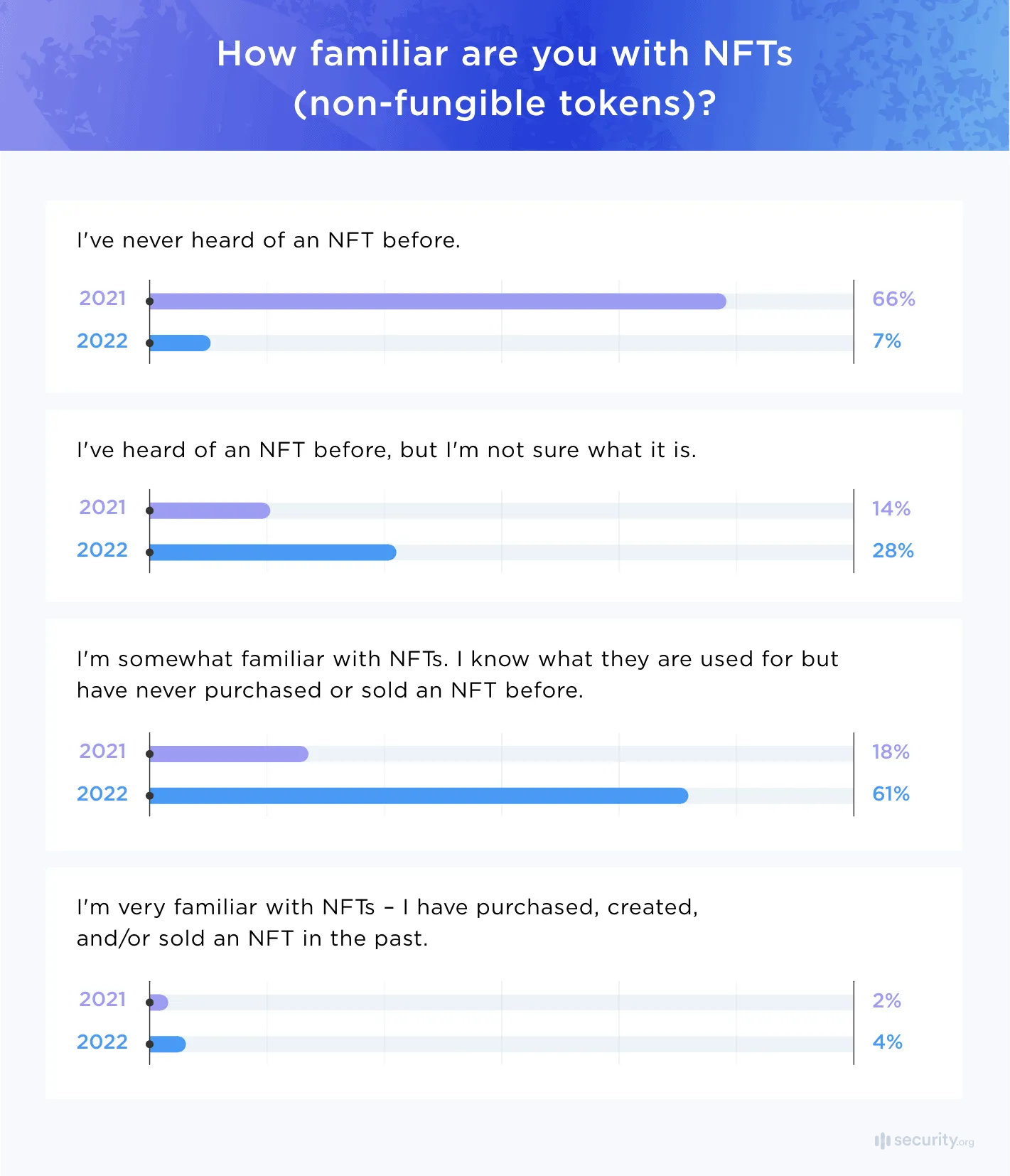
Research shows that while the majority of people may not currently be considering purchasing NFTs, there is a growing awareness and curiosity surrounding them. According to a survey conducted by Security.org, a significant number of people (19%) expressed interest in purchasing an NFT in the next twelve months.
The NFT market has also experienced significant growth, with sales increasing from $13.7 million in 2017 to $2.5 billion in the first half of 2021. Although they might not be actively purchasing NFTs at present, the growing awareness signifies the potential for future interest and exploration. It's encouraging to witness an increasing number of individuals becoming familiar with NFTs and engaging in conversations about them. Check out the stats below courtesy of Security.org.
While some may currently hold reservations about the value and purpose of NFTs, it is essential to recognize the evolving nature of this emerging technology. As more people become informed and gain a deeper understanding of NFTs, their perspectives and inclinations may shift positively, leading to potential engagement and participation in the NFT market.
Some People Are Buying NFTs
Despite not being a mainstream purchase as of yet, people are slowly buying NFTs. The number of people who have bought one has doubled - from 2% to 4%. It's not many people, sure. But that's a significant increase.
And this coincides with how many people are actually aware of NFTs as a concept. Two thirds of people had never heard of NFTs in 2021. In 2022, it was only 6%.
Despite awareness skyrocketing, people didn't necessarily understand them. But they're getting there. The number of people who were 'somewhat' familiar rose from 18% to 61%.
This suggests that - as people move along in their understanding - they're more likely to buy an NFT. In fact, Mordor Intelligence believes that NFT purchases will grow 32% each year.
Most Success Has Come From Play-to-Earn
Gaming has a rather different relationship with NFTs. It seems that it's here - in our industry - that we're seeing progress.
The major roadblock has been value. Why get an NFT in the first place? When you buy an item in a game, it's a bit pointless if all it's doing is paying the developer. What's the difference between that and a usual in-app purchase?
But when players can start to trade and earn money off these NFTs, the story changes. Mordor found that the biggest successes were Axie Infinity, Bored Ape Yacht Club, CryptoPunks, Gods Unchained, and The Sandbox. All these games give the player value for their NFT.
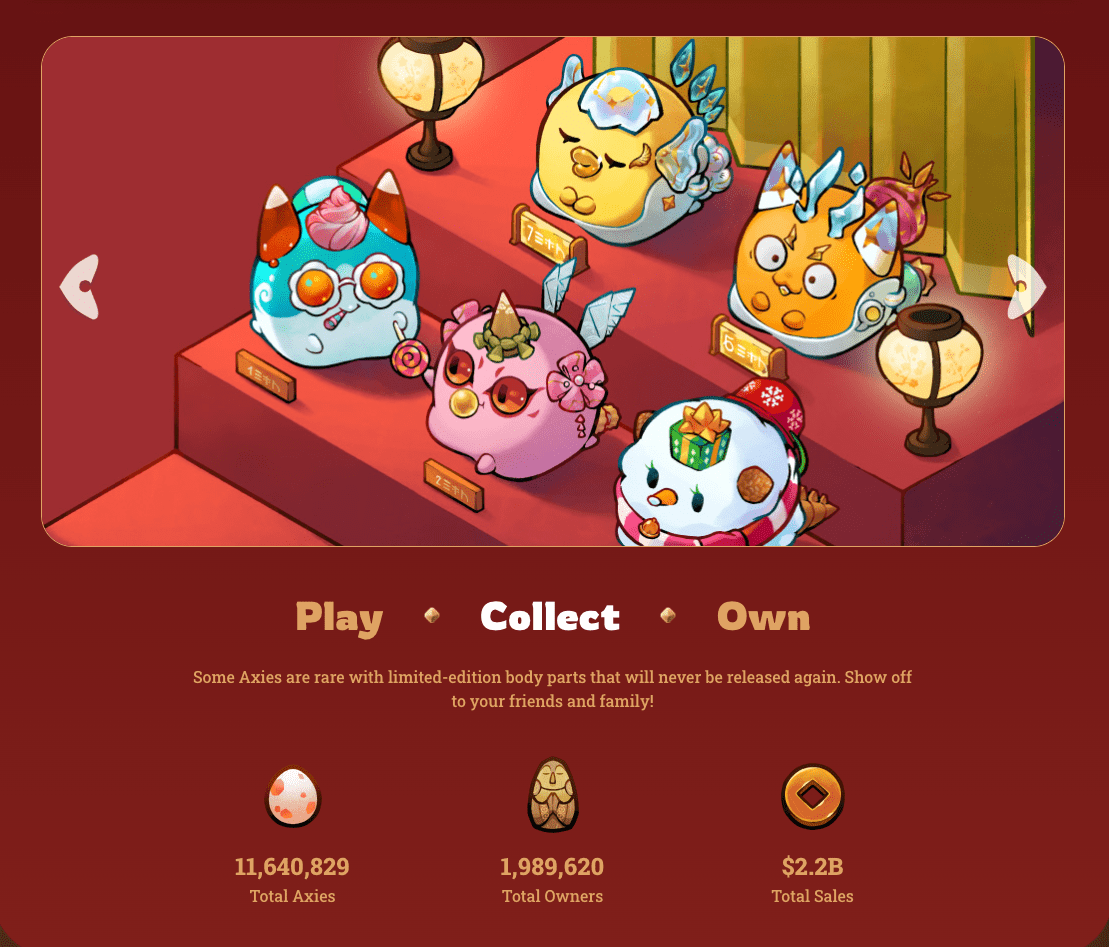
As the player goes through the game, they earn the NFTs - which they can then sell. A lucrative and exciting prospect. In fact, Mordor Intelligence found that one individual managed to make three times more than they would've at their usual job - playing a Pokemon-like game.
AI Could Normalize NFTs in Gaming
AI has made a lot of progress in recent years, especially in the last 12 months. There are now AI tools like ChatGPT, PicFinder, Google Bard, and Chatsonic that can help build games and write code.
It's possible that developers might start using tools like ChatGPT to come up with ideas for NFTs and save time developing them. This could be a useful way to keep players interested in their games - increasing engagement and retention.
With that in mind, we could see a huge boost in the number of NFT games as developers get inspired by AI.
We're Still in the Early Days
We're at the beginning of the curve for NFTs. It's mostly early adopters, rather than mainstream popularity. The technology isn't particularly easy to understand, there aren't many developers working on games that actually use NFTs, and the metaverse angle won't kick off until the metaverse itself is ubiquitous.
But for gaming, it still has potential. We've not heard the last of NFTs. Right now, there's some reputation baggage that it'll carry for some time. But, in a couple of years, when the technology is more polished and easy to use - we might see a sudden resurgence. And we're definitely going to see more game developers using NFTs in the future.
FAQ
Are NFTs still relevant in gaming?
Yes, while mainstream NFT hype has cooled, the play-to-earn model in gaming continues to show potential. Games like Axie Infinity and Gods Unchained have demonstrated that NFTs can provide tangible value to players when they can trade and earn from their in-game assets.
What is the difference between gaming NFTs and regular NFTs?
Gaming NFTs provide functional value - they represent in-game items, characters, or cards that players can use, trade, and earn from. Regular NFTs are often purely collectible images without utility, which is why gaming NFTs tend to have more staying power.
How could AI change the economics of NFT game development?
AI-assisted development reduces the cost of generating NFT assets, writing smart contracts, and building the game content that gives NFTs their value. The practical effect is that studios with smaller budgets can now enter the space, which increases supply and competition – but also raises the floor for what players expect from an NFT-integrated game.
Is the NFT gaming market still growing or has it peaked?
The play-to-earn boom peaked and contracted sharply after 2021, but the underlying market for tradeable in-game assets hasn't disappeared. Games that tie NFT ownership to genuine gameplay utility – rather than pure speculation – have retained more durable player bases. The market has narrowed to players who see functional value in what they own.
![Player Expectations in 2025: An Overview of Key Player Trends in Games [Updated for 2026]](/images/blog/player-expectations-in-games-in-2025-featured.webp)

![AI in Game Development: How Studios Are Using AI to Build and Operate Games [Updated for 2026]](/images/blog/ai-in-game-development-featured.webp)
![Backend Tech: Build or Buy? The Industry Weighs In [Updated for 2026]](/images/blog/backend-tech-build-or-buy-industry-opinions-featured.webp)