

![Player Expectations in 2025: An Overview of Key Player Trends in Games [Updated for 2026]](/images/blog/player-expectations-in-games-in-2025-featured.webp)

An overview of how player expectations have evolved in the free-to-play era, from cross-platform social experiences to instant access and 'forever games'. Understand the key trends shaping live service games and what they mean for your tech and monetization strategy.
How Player Expectations Have Shifted: Free, Cross-Platform, and Key Trends in Live Games
The free-to-play (F2P) model is a staple of games industry monetization, making up 78% of global games industry revenue.
Players across all platforms now have instant access to games made by hugely talented teams often with the latest tech advancements and recognizable IP - all with no entry fee.
But how does this impact the expectations of players, and what does it mean for your tech decisions and monetization strategy? We break it down below.
Games as Ever-Evolving Social Experiences
Players aren't just viewing games as a source of entertainment, they're increasingly a key platform for socializing.
According to the Pew Research Centre, 72% of teens who game say that a reason why is to spend time with others.
Today's biggest live service titles such as Fortnite and Roblox provide built-in chat functions for players to communicate as they play.
Social features are equally important for players logging in at different times; with competitive LiveOps events and leaderboard challenges driving engagement.
But players want to do more than speak with each other; live service multiplayer games are also an avenue of self-expression.
Roblox's 2023 Digital Expression, Fashion & Beauty Trends Report reveals that 40% of Gen Z feel it's easier to present their authentic selves in the metaverse than in the physical world.
For game studios, there's a clear opportunity; a robust, ever-updated catalogue of in-game-items on sale can not only drive revenue but also encourage retention as players return to their avatar.
Plus, online experiences need dependable server tech that both players and studios can rely on - the last thing any studio wants is to launch a game to such a large fanfare that it crashes servers and renders a game unplayable.
Indeed, many studios in the past have become victims of their own success in this way.
Reducing Barriers to Play Games Across Multiple Platforms
Today's biggest live service releases are cross-platform, cross-generational experiences.
Take the success of the aforementioned Fortnite, as well as Among Us, and Minecraft; all of these games enable players from mobile to the latest-gen consoles to experience titles together.
It means players don't require the latest hardware or deep pockets to play games with one another. Players today have become accustomed to instant access, whether that's on console with cloud gaming built-in to Xbox and PlayStation monthly premium subscriptions as standard or mobile's tried-and-tested playable ad format.
Providing over-the-air updates for your game is another way to recognise this appetite for instant experiences. These seamlessly introduce new mechanics and features to players without the need for app store-side game updates.
One way to achieve this, for example, is via the Metaplay SDK, which allows developers to manage entire game economies and content delivery pipelines over-the-air via the advanced Game Configs feature.
Metaplay's Game Configs toolkit includes diffing, version control, and rollback capabilities - as well as error reporting on new builds to ensure you're not shipping a config that could cause build errors in production. All of these are valuable features that are lacking in most off-the-shelf config delivery systems, and usually take multiple years of effort and customization for developers to build themselves.

The lesson here for tech-makers? Create your games with as little friction as possible for the player.
Of course, not all games are designed to span as many platforms as mentioned above, but beginning your game launch on mobile provides a strong bedrock to scale your tech with global audiences; then who knows where your franchise will go next?
Leveraging IP to Broaden Player User Acquisition in Gaming
Failures of console titles such as Concord show the challenge of putting new IP under the AAA price tag.
It's the difference with mobile in which the free-to-play model is the norm; aside from their time, players have little to lose from trying out a new franchise - see the success of new IP such as Royal Match and non-mascot-driven titles such as Block Blast.
Of course, the success of new IP is never guaranteed (see Supercell CEO Ilkka Paananen's most recent blog post deconstructing their 2024). As Ilkka explains:
Without risk-taking, we will not create new outlier successes. We should not think of risk as a chance for failure but as a chance for outlier success.

Ilkka Paananen
CEO at Supercell
The lesson for developers here? Your technology needs to be prepared to scale for this 'outlier success'.
Whether you're creating new IP or building experiences on existing intellectual property, a broad appeal for your game should be front of mind.
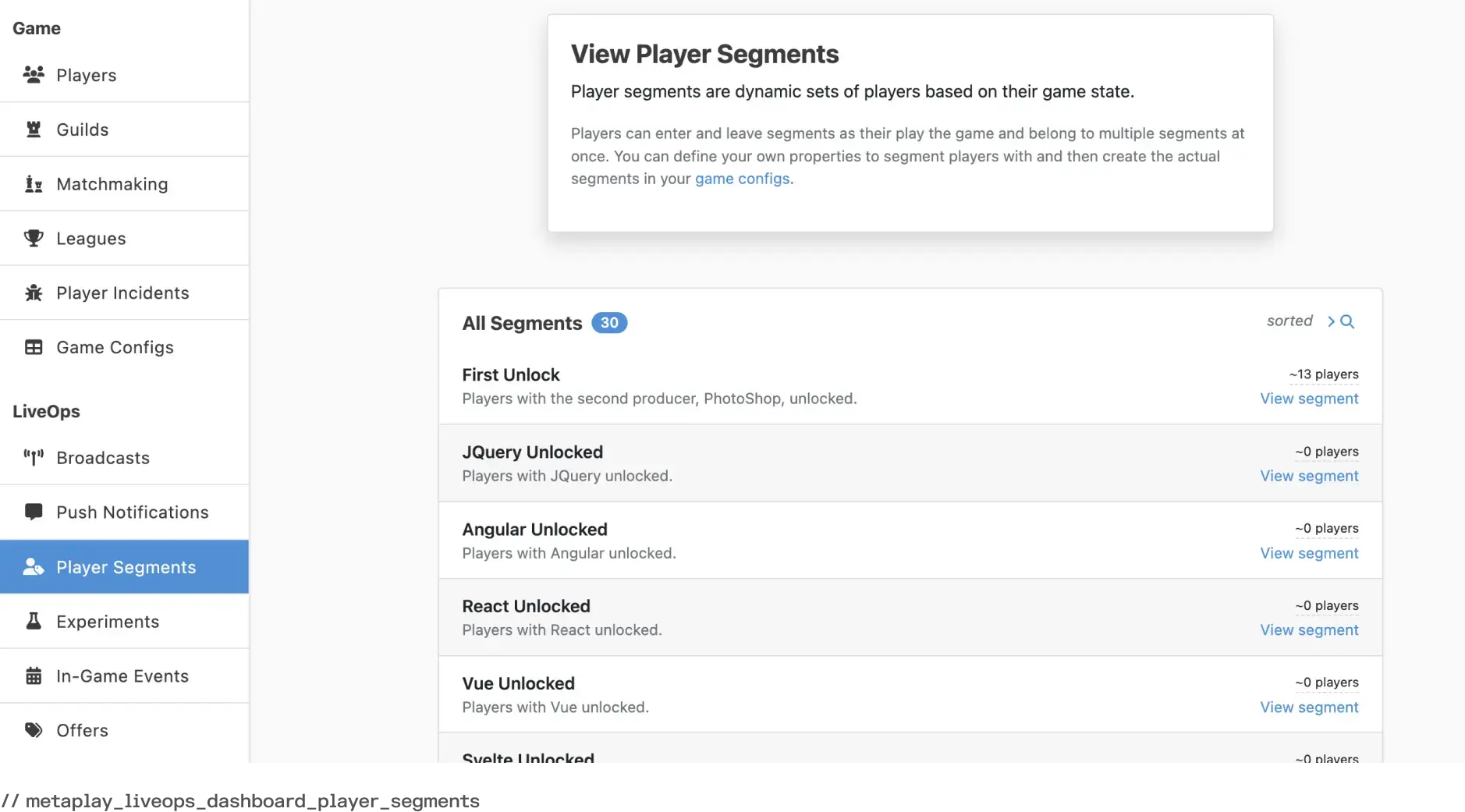
Then, audience targeting becomes a powerful tool as segmented groups are targeted with push notifications highlighting in-app-purchases or seasonal events which drive revenue and engagement.
The Renewed Importance of Becoming a 'Forever Game'
Players are constantly surrounded with high-quality ever-updated games across platforms.
Simply gaining their interest is not enough - single-session plays will do little to bring in the high revenues from players studios need in the face of rising user acquisition costs.
Instead, forever games are the holy grail: the game that a player keeps coming back to (and continues to be served with compelling new content and reasons to spend).
To achieve this recognition from players, games must be both accessible with features and LiveOps delivery that keeps the players coming back for more. And when this growth does come, make sure your tech is prepared with a capable backend implemented early in the production cycle.
FAQ
What do players expect from live service mobile games in 2025 that they didn't five years ago?
The baseline has risen sharply. Players now expect cross-platform access so they can play with friends regardless of device, regular personalised LiveOps content rather than just seasonal updates, and free-to-play entry with meaningful reasons to spend rather than paywalled progression. Games are increasingly viewed as social spaces – the expectation isn't just that a game is fun, but that it's somewhere worth coming back to every day.
Why are the top-grossing mobile games in 2025 mostly titles that launched years ago?
The majority of the top 100 highest-grossing mobile games have been live for four or more years. Brawl Stars, for example, grew from around $10 million per month in in-app purchases at the end of 2023 to $60–70 million per month by late 2024 – six years after launch. Sustained investment in LiveOps, personalisation, and A/B testing compounds over time in ways that a new launch simply cannot replicate immediately.
What backend capabilities does a mobile game need to support long-term player retention?
Retention at scale requires a backend that can run concurrent LiveOps streams, segment players for personalised content, push updates without platform approval delays, and support A/B testing across millions of active users. These aren't features you can add after launch without significant rework – studios that don't plan for them early tend to hit a ceiling at the point when the game is gaining momentum and engineering resources are already stretched.
Can a mobile game with new IP succeed against established franchises in 2025?
Yes – and the free-to-play model is the reason. Because players pay nothing to try a game, the barrier to adoption for new IP is low enough that quality and novelty can win. Royal Match and Block Blast are recent examples of games with no franchise heritage breaking through. The risk, as Supercell CEO Ilkka Paananen has argued, is not that new games can't succeed – it's that studios stop taking the risks required to create new outlier successes at all.

![AI in Game Development: How Studios Are Using AI to Build and Operate Games [Updated for 2026]](/images/blog/ai-in-game-development-featured.webp)