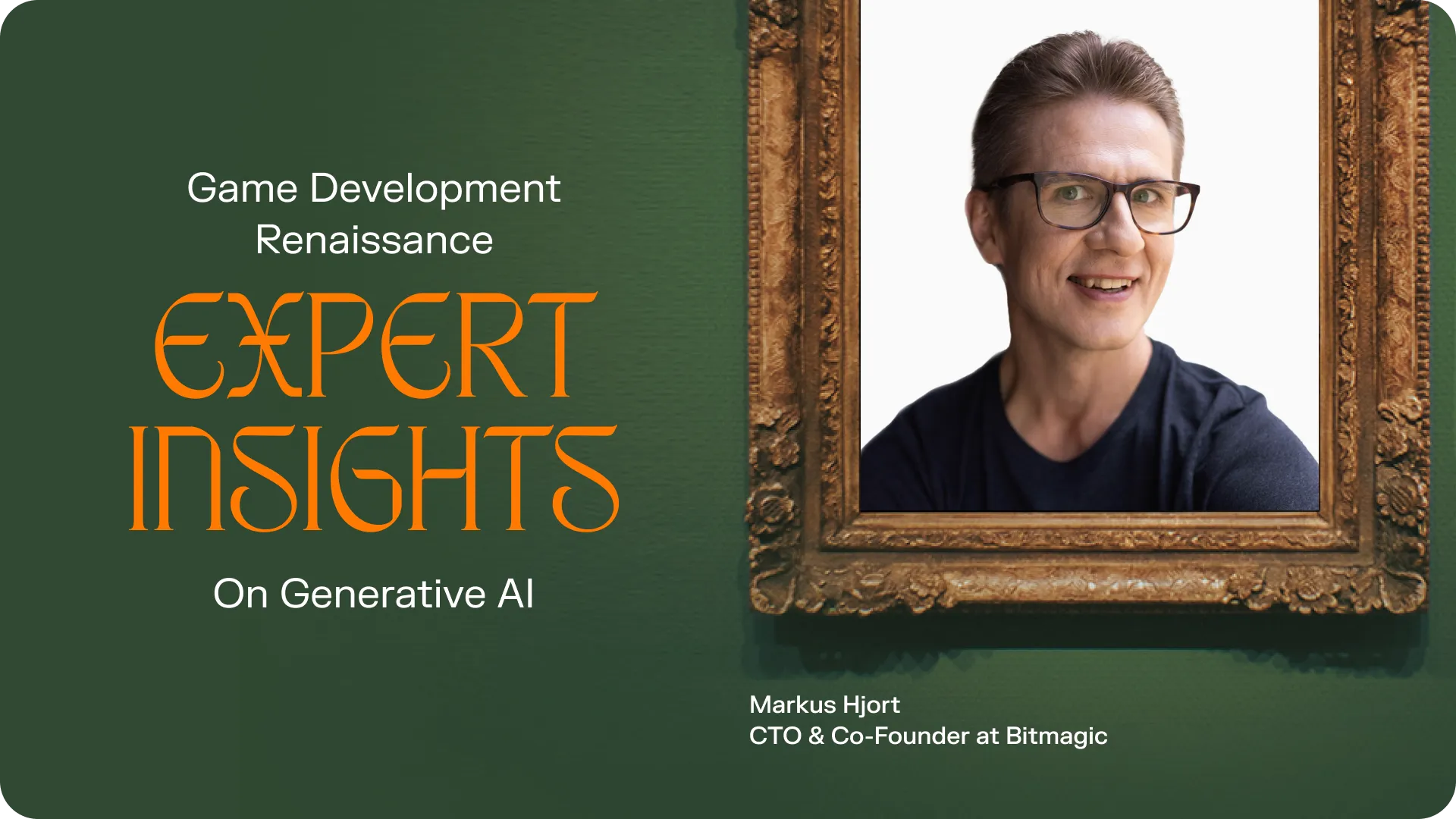

Markus Hjort, CTO and Co-Founder of Bitmagic, discusses how generative AI is becoming a force multiplier for game studios in 2025. From accelerating content creation and prototyping to the return of soft launches and an evolving investment landscape, this interview explores why smaller teams leveraging AI and external tooling are poised to compete with the best.
Why Generative AI Is Converging for Game Development
When we asked Markus about what excites him most, his answer was confident and clear: "We're already in the future. What we're building at Bitmagic is technically possible today, but now is when the technology truly converges. Costs are falling, competition is intensifying, and generative AI is significantly improving. That's when it'll really take off."
Generative AI has evolved from a trendy concept to a critical component for game development. Markus believes studios that can effectively harness AI will significantly accelerate their content creation and iteration speeds, gaining an essential competitive advantage. "With small teams, rapid testing and iteration are crucial," he adds. "You simply don't have the luxury of big budgets or extensive timelines."
Why External Tooling Is Essential for Lean Game Studios
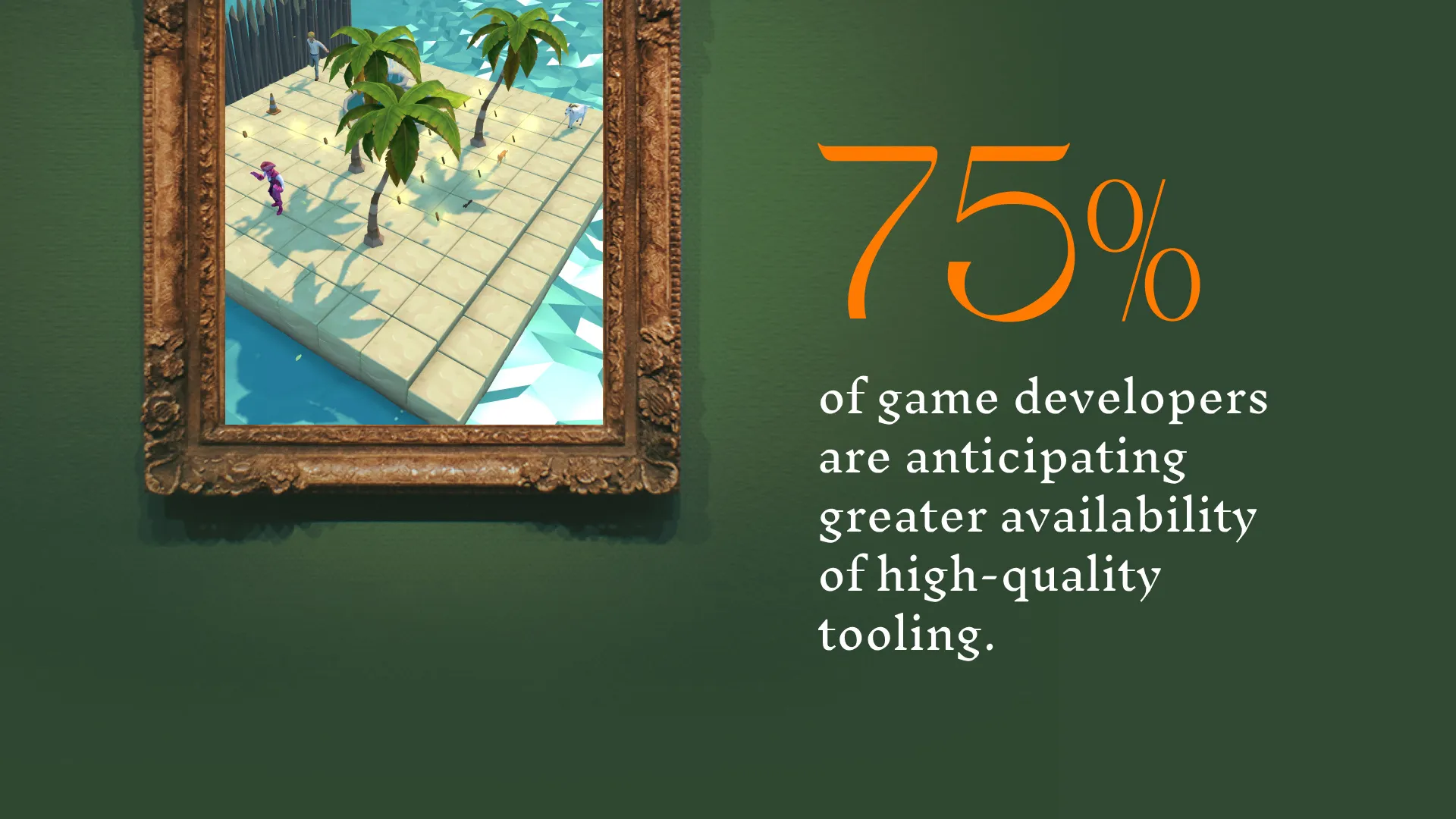
According to Markus, one notable shift for game studios is the increasing reliance on external tooling, especially among smaller and emerging teams. "If you're just starting out, external tools are essential," he explains. "Getting your game to market quickly means focusing your resources on what makes your game unique, while external solutions handle the rest."
Reflecting on past experiences, Markus recalls when a 30-person team was needed to build everything internally. "That kind of scenario just doesn't make sense anymore," he says. "Today, the market offers countless powerful external tools, letting studios prioritize core creative work."
This approach not only streamlines development but also resonates positively with investors. "Investors appreciate teams that know exactly where to invest their resources," Markus notes. "Demonstrating wise use of external tooling versus building everything internally signals strategic maturity."
Generative AI as a Force Multiplier for Game Studios
Generative AI frequently comes up as a transformative force in Markus's perspective — especially for live service games.
AI is a force multiplier. From creating compelling ad campaigns to rapidly prototyping gameplay, generative AI lets small teams do more with fewer resources.

Markus Hjort
CTO & Co-Founder at Bitmagic
Markus stresses that adopting generative AI will be crucial in maintaining competitive speed, especially as the live service game sector evolves rapidly. "Studios embracing AI can quickly iterate and refine their offerings," he says. "Speed and intelligent adaptation will set successful studios apart."
Why Soft Launches Are Making a Comeback
Metaplay's recent industry surveys indicate that 90% of studios are planning launches or soft launches, marking a significant shift from recent industry hesitance. "Studios clearly sense it's time to launch," Markus observes. "However, this also means intense competition. Finding and retaining your audience quickly becomes even more critical."
His recommendation? Act decisively and swiftly. "The barriers to entry are lower than ever, but success still demands rapid testing, quick iterations, and smart audience targeting. Studios that master this approach will stand out."
The Evolving Investment Landscape for Game Studios
As studios regain momentum, the investment scene is also reawakening. Markus describes a cautious but growing optimism among investors: "We recently closed our seed funding, and we see similar trends among our peers. There's capital ready to move after a period of hesitation, and now it's actively seeking promising opportunities."
Markus also highlights a notable shift in funding sources, with increased investment from previously underrepresented regions. "New gaming hubs and investment funds indicate a diversification in funding sources," he notes, "propelled by the remote work trend and the decentralization of talent pools."
Embracing the Game Development Renaissance
The games industry stands at a crossroads. There's a lot of potential, but the competition is tougher than ever. The studios that succeed will be those who can strategically use external tools, leverage generative AI, and decisively target their audiences.
The past few years were quiet, but now the industry is buzzing with renewed activity. It's an incredibly exciting time, and this year promises to be especially transformative.
Markus Hjort
CTO & Co-Founder at Bitmagic
At Metaplay, we believe the Game Development Renaissance represents a new chapter for game creators everywhere – a chance to build sustainably, innovate rapidly, and flourish together.
FAQ
How is generative AI changing game development for small studios?
Generative AI acts as a force multiplier: small teams can produce ad creatives, prototype gameplay systems, and iterate on content at a pace that previously required far larger headcounts. Markus Hjort's view is that the technology has already converged – costs are falling, quality is improving, and studios that adopt it now gain a compounding speed advantage over those that don't.
Why are soft launches making a comeback in 2025?
Metaplay's industry surveys found 90% of studios planning launches or soft launches in 2025 – a sharp reversal from recent hesitance. Markus attributes this to lower barriers to entry and renewed investor appetite. The downside is that more studios launching simultaneously means more competition for audience attention, making rapid testing and iteration even more critical than it was before.
Should a small game studio build its own tools or use external solutions?
External tooling is the more pragmatic choice for most small and emerging studios. Markus cites his own experience: what once required a 30-person internal team to build can now be handled by off-the-shelf solutions, freeing the studio to focus on what makes the game itself distinctive. Investors also respond positively to studios that demonstrate strategic use of external tools rather than burning resources on solved infrastructure problems.
Is the games investment landscape recovering after the 2023–2024 downturn?
Cautiously, yes. Markus describes a period of hesitation giving way to active deal-making, with capital ready to move toward promising opportunities. He also notes geographic diversification in funding sources – new gaming hubs and regional investment funds are emerging, partly driven by remote work normalising distributed teams outside traditional gaming centres.