

Industry veteran Oliver Kern shares his vision for a more sustainable games industry, from new discovery channels and modular studio structures to the realities of selective funding in 2025.
Game Discovery Is Changing: What Developers Need to Know
Discoverability has long been one of the industry's most stubborn pain points. Even when great games are built, getting them in front of the right audience is another story entirely. As Oliver puts it, "People feel like, okay, discovery is just not getting better."
But looking ahead, he sees the beginnings of a shift, particularly with the rise of new storefronts across mobile and PC. "There are more marketplaces, more stores on multiple platforms," he explains. "You might end up with 25 stores, which is challenging, but at least you feel like you're more in control."
That growing sense of control matters. While fragmentation means developers may need to do more work, it also opens up fresh routes to market and more chances to experiment. Developers are no longer bound to a single platform's algorithm or ad economy.
Why It's Time to Rethink Game Studio Structures
Beyond discoverability, there's a deeper, more structural issue plaguing the industry: how games are actually made. Oliver believes it's time for a fundamental reset.
I don't think how games were made over the last five years still applies. We need a better, more sustainable way of doing things.

Oliver Kern
Industry Expert & Advisor
One of his boldest proposals? Separating the creative and production sides of game development. Much like the film industry's transformation in the '60s and '70s, Oliver pictures a model where small, creative teams focus solely on ideation and IP development, while specialized production companies take care of the heavy lifting. "If you're great at raising money and building a compelling IP, then do that," he says. "Don't feel like you also need to grow a team from five to fifty and manage all of production."
He compares the ideal model to modern film production, where multiple studios with different strengths collaborate, resulting in more consistent output, less burnout, and better final products. "I'd love to see a future where we see five or six logos at the start of a game, just like in movies," he notes.
This modular model could also help avoid the "grow at all costs" mentality that has burned out many successful teams post-funding or post-acquisition. Studios would no longer feel pressured to do everything themselves, or scale rapidly just to stay competitive.
In short, the future of game development might not be about going bigger. It could be about going smarter.
The Funding Landscape for Games Remains Tight, but Selective Investment Is Still Happening
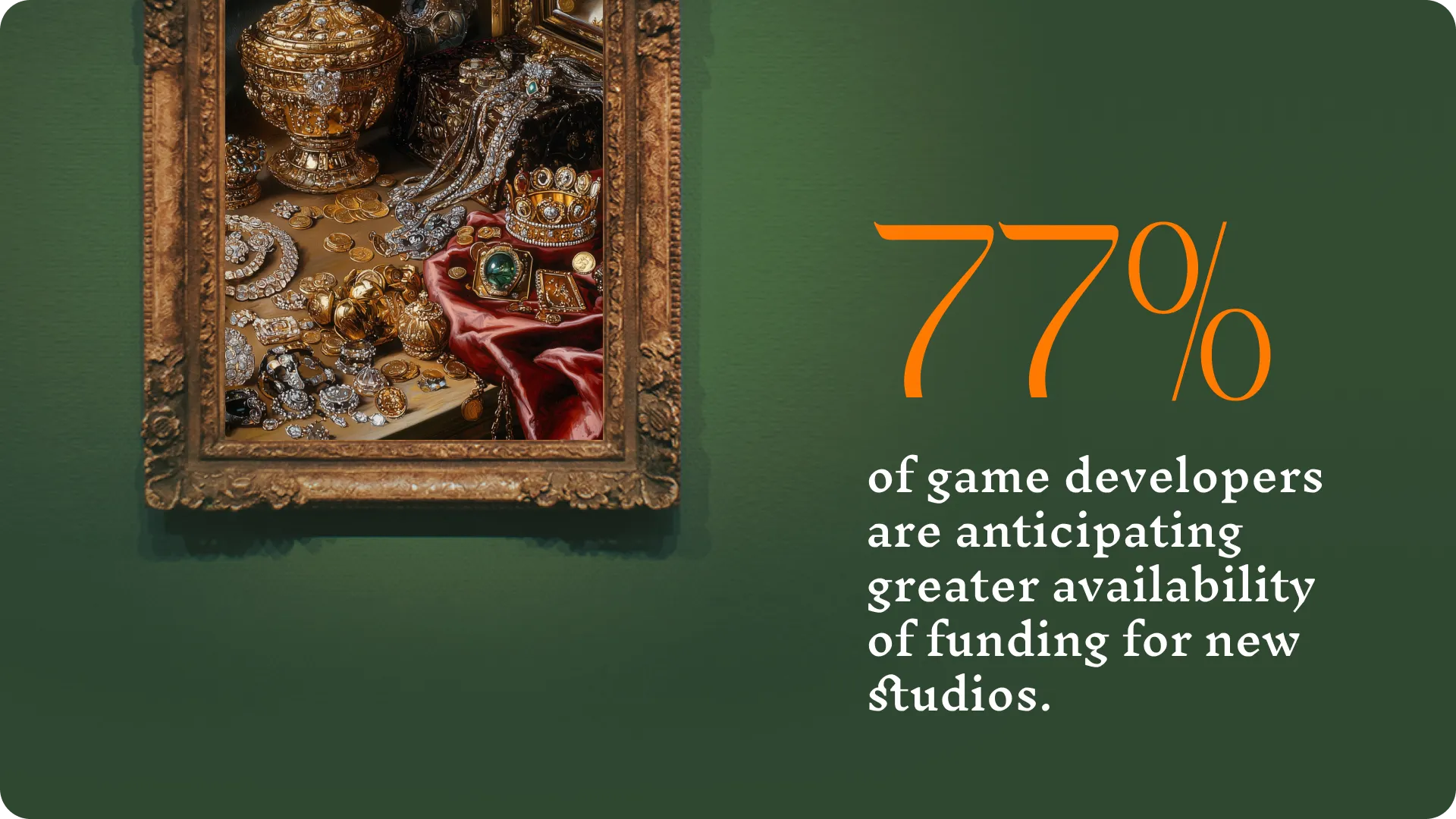
Despite some optimistic headlines, the broader funding environment for content, especially games, is not significantly improving. Capital is still scarce, and most investors remain cautious. "But funding hasn't disappeared," Oliver notes. "It's just become a lot more selective."
That means templated, derivative pitches are struggling, while bold, standout ideas still find support, albeit in smaller, more deliberate ways.
Teams are increasingly forced to get scrappy in the early stages, combining grants, partnerships, and early community traction to gain momentum. "You're seeing solo devs and micro studios breaking through," Oliver observes. "Balatro, Grow a Garden on Roblox: these weren't high-budget projects. They were different enough to cut through the noise."
For studios looking to raise, the reality is clear: generic doesn't get funded. Originality, clarity, and early proof points matter more than ever.
The Future of Game Development Is Leaner, Smarter, and More Focused
So where does this all leave us?
Looking across the trends of discovery, production, and investment, one theme keeps coming back: clarity of purpose. For Oliver, the studios that thrive now won't be the biggest, loudest, or most well-funded — they'll be the ones who know exactly what they're best at and build around that strength. "We've seen so many people - especially those who went through big studio acquisitions - go back to square one," he reflects. "But I hope we're smarter this time. We can't just keep hiring endlessly and expect things to work."
The real opportunity ahead is to move away from old habits and toward new, more sustainable ways of building games. Studios don't need to be everything to everyone. Instead, they can focus on their core capabilities, form smart partnerships, and scale in ways that actually make sense.
Something is not right. And we, as an industry, have to look in the mirror and say: we have to do better.
Oliver Kern
Industry Expert & Advisor
It's not just optimism for optimism's sake. It's about building the conditions for real, long-term success.
FAQ
Is game discovery actually improving for developers in 2025?
Slowly, and unevenly. Oliver Kern points to the rise of new storefronts across mobile and PC as a meaningful shift – more marketplaces mean more routes to market and less dependency on a single platform's algorithm or ad economy. The fragmentation creates extra work, but also more control. The overall sentiment: discovery isn't solved, but developers have more levers than they did five years ago.
What does a more sustainable game studio structure look like?
Oliver's proposal is a modular model borrowed from film production: separate the creative side from the production side. Small teams focus on ideation and IP development; specialist production companies handle the scaling and execution. Studios that are great at raising money and building compelling IP shouldn't also feel obligated to grow from five to fifty people. Collaboration between focused studios – rather than one team trying to do everything – produces more consistent output with less burnout.
Is game funding improving in 2025?
Not broadly. Capital remains scarce and investors cautious, but selective investment is still happening. The gap has widened between generic pitches, which struggle to find support, and genuinely original ideas with early proof points. Balatro and Grow a Garden on Roblox are cited as examples of low-budget projects that broke through by being different enough to cut through the noise. For studios looking to raise, originality and clarity matter more than ever.
Why do so many game studios struggle after acquisitions or rapid growth?
The "grow at all costs" model post-funding or post-acquisition pushes studios to scale in ways that don't match their actual strengths. Oliver Kern's observation: many people who went through big studio acquisitions ended up back at square one. The studios that survive are those that know exactly what they're best at and build around that strength, rather than trying to be everything to everyone.