
Most studios treat their live service game metagame as a phase-two problem. The backend decisions made before launch determine what's possible after it. Metagame systems require specific infrastructure, and deferring it is more expensive than getting it right from the start – one of the lessons Teemu Haila covers in Metaplay and Photon's new whitepaper on live service game development.
What the metagame is in the context of a live service game
The metagame is everything outside the match itself – progression, economy, daily goals, events, the social graph. The systems that determine whether a player opens the app on day two, day seven, and day thirty.
None of these systems are independent. An economy designed without future monetization in mind has to be rebuilt when you add it. A progression system that doesn't account for events creates constraints on every LiveOps campaign you run later. The longer you defer these decisions, the fewer options you have when they matter most.
Why live service game retention depends on the metagame
Median Day 1 retention across mobile games is 23%. By Day 7 it's 7–8%. By Day 30, under 3% of players are still around.
Bain & Company put a number on what moving those figures is worth: a 5% improvement in retention translates to a 25–95% increase in profit. The metagame is how you move them. Day 7 retention is shaped by what players encounter in their first week. Running events in month three won't recover it.
Why retrofitting metagame systems post-launch is so costly
The metagame requires specific infrastructure. A backend that handles player state across sessions and schema migration as you iterate. Server-authoritative transaction logic in the economy, or you'll spend months post-launch closing exploits. LiveOps tooling that's part of how game config works, not something added onto a system that wasn't designed for it.
If those foundations aren't there when you go live, you're not adding a metagame in a controlled way. You're doing a backend rebuild while the game is running and players are paying.
Design the meta late, and monetization feels bolted on and forced. Players notice this, and resist it. Design it early, weave it into the fabric of the experience, and purchases feel natural – earned, even.

Teemu Haila
CPO & Co-founder, Metaplay
How Metaplay supports live service game metagame design from day one
Metaplay ships with schema migration, server-authoritative game logic, game config management, A/B testing, and LiveOps tooling in the core platform. All of it is there from day one, so the infrastructure decisions that typically slip to phase two are already resolved when development starts.
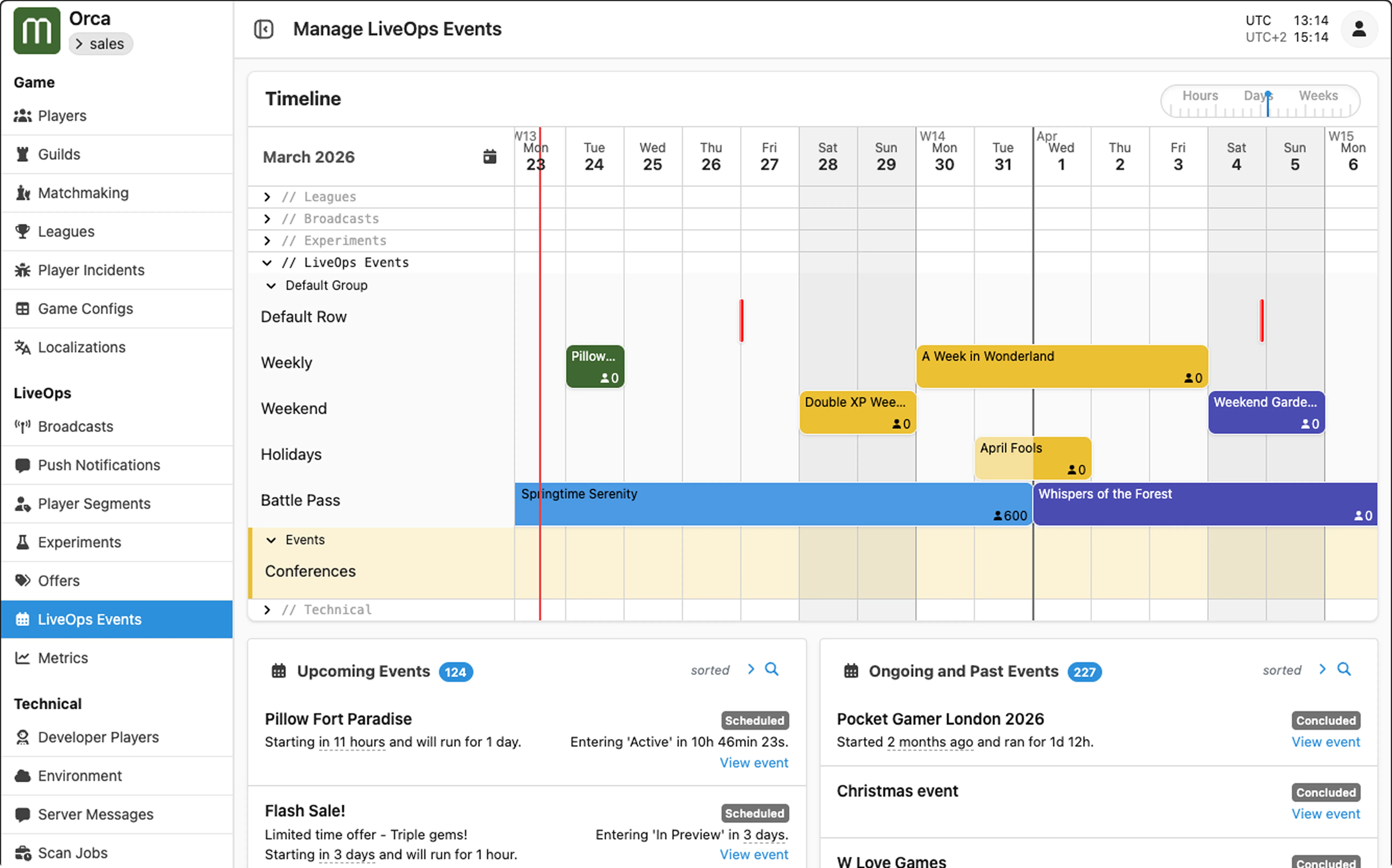
57% of all gaming time goes to titles six or more years old (Newzoo). Getting there requires an economy that can evolve, a progression system built to extend, and a LiveOps infrastructure that gives you room to operate for years. The studios in the Metaplay customer base running games at that longevity made those calls during development, when the cost of getting them right was a fraction of what it becomes post-launch.
Download the full whitepaper
Teemu's full take – along with three other lessons from 15 years of live service games – is in the whitepaper we put together with Photon. It also covers two studios currently in production with real-time multiplayer games and the data behind the retention trends.
FAQ
What is the metagame in a live service game?
The metagame covers everything outside a single play session: progression, economy, LiveOps events, social features, and the between-session loop that keeps players coming back. It determines whether a player returns on day two – and whether your game generates the lifetime value a live service business model depends on. See how Metaplay handles progression and LiveOps from day one.
When should you design progression and economy systems for a mobile game?
When you pick your backend. Most studios treat progression and economy as game design decisions, but they're also infrastructure decisions – and the backend you choose determines what's possible. A backend built for live service will have schema migration, server-authoritative transactions, and LiveOps tooling as first-class features. A generic backend won't – and adding them after launch means doing it while players are active and the business depends on continuity. The Metaplay documentation covers how these systems are structured.
Why does live service game retention drop so sharply after day one?
Most players who drop off between D1 and D7 never encounter the metagame – the progression hooks, events, and economy that drive long-term play. Median D7 retention across mobile is 7–8%, and Bain & Company found that a 5% improvement in retention translates to a 25–95% profit increase. The metagame is what moves those numbers, which is why it needs to be in the architecture before the core loop ships.
How does Metaplay support metagame development from day one?
Metaplay ships with player progression, game config management, over-the-air updates, A/B testing, and LiveOps tooling in the core platform. Server-authoritative design is the default. Studios get full source code access from day one, so nothing is a black box and nothing needs to be bolted on later. Talk to the team to see how it fits your game.